

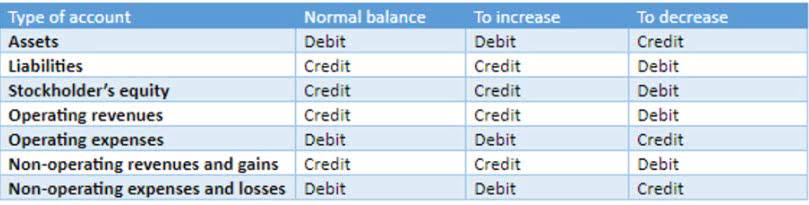
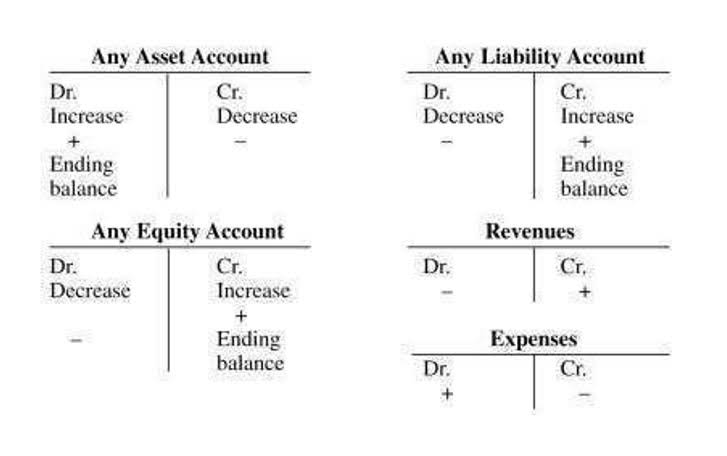
Assets represent what the company owns, including cash, investments, inventory, property, and equipment. Liabilities represent the company’s obligations and debts, such as loans, accounts payable, and accrued expenses. Equity represents the residual interest in the assets of the company, after deducting liabilities. In financial markets, liquidity refers to how quickly an investment can be sold without negatively impacting its price. The more liquid assets = liabilities + equity an investment is, the more quickly it can be sold (and vice versa), and the easier it is to sell it for fair value or current market value.
Current Assets Definition

They have higher usefulness to the current owner versus potential buyers. But these assets generally take weeks or months to divest, compared to current asset liquidity measured in days. The other current assets have varying degrees of liquidity but should materialize within 12 months. Horizontal format lists all liabilities on the left-hand side and all assets on the right-hand side of the balance sheet. Generally, liquid assets are traded on well-established markets with a large number of buyers and sellers.
What is a Liquid Asset?

This guide breaks down the key differences and similarities between these two accounting giants, helping you understand which one is right for your business. The company’s total current assets increased by 2.09% from $ 128,645 Mn to $ 131,339 Mn in 2017 and 2018, respectively. Audit standards prohibit arbitrary reordering of assets on balance sheets.
Liquidity Ratio
A liquid asset is cash on hand or an asset other than cash that can be quickly converted into cash at a reasonable price. In other words, a liquid asset can be quickly sold on the market without a significant loss of its value. A current asset is an item on an entity’s balance sheet that is either cash, a cash equivalent, or which can be converted into cash within one year. If an organization has an operating cycle lasting more than one year, an asset is still classified as current as long Bookkeeping for Startups as it is converted into cash within the operating cycle.
- Illiquid is just a fancy way of saying that you don’t have the immediate cash to meet a pressing need.
- The above equation means that at any point in time, a business’s assets should be equal to its liabilities and equity.
- These funds are then invested in assets which helps the business in generating revenue.
- It allows companies to revalue fixed assets to reflect fair market value.
- Investors who don’t have adequate liquid assets run the danger of selling assets quickly and possibly at a loss as they scramble to accumulate the cash for their short-term financial obligations.
- The order of items in the balance sheet ensures clarity, transparency, and consistency in financial reporting.
Alternative Formats of Balance Sheet Presentation
Inventory valuation is a biggie when comparing GAAP vs IFRS balance sheets. Companies use methods like FIFO (First In, First Out), LIFO (Last In, First Out), and weighted average to value inventory. IFRS considers whether an asset will have future economic benefits to assess its value. GAAP, however, measures intangible assets at fair market value and that’s about it. So under GAAP, intangible assets must be reported at cost, while IFRS allows for revaluation to reflect changes in fair value. It’s like GAAP is stuck in the past, while IFRS is keeping up with the times.
Some courses may allow guest access
- Next, let’s look at examples of specific assets within each classification along with their relative liquidity.
- To track how a company’s cash position changes over time, accountants prepare a statement of cash flows, which shows all the cash coming in and going out of the business.
- In other words, a liquid asset can be quickly sold on the market without a significant loss of its value.
- A ratio of 3.0 would mean they could cover their current liabilities three times over, and so forth.
- It shows a neat summary of your company’s assets, liabilities, and equity.
Assets that are not expected to convert into cash within a year, such as Property, Plant & Equipment (PP&E), are categorized as non-current assets and listed further down in the balance sheet. The most common liquidity ratios are the current ratio and the quick ratio. Cash liquidity is a measure of a company’s ability to generate cash from its operations and accounts receivable. Non-current assets are listed after current assets order of liquidity and include resources that provide value over the long term. For current asset accounts, cash and cash equivalents is the most liquid with inventories being the least liquid due to the amount of time it can take to sell stocks to customers. Marketable securities and account receivables are somewhere in between.